
Winn Parish Arrest Warrants Explained
An arrest warrant orders a peace officer to bring a named person into custody on a stated legal basis. That is its whole job. In Louisiana the order follows a sworn affidavit and a finding of probable cause that an offense occurred and that the named person committed it. That step separates a warrant from a mere accusation. It also can follow an indictment or an information when the court skips a summons. Either way, the paper is judicial. In Winn Parish the file may begin in a district criminal case, in Winnfield City Court with its limited authority, or in a justice of the peace proceeding within that office's bounds. Each court keeps its own docket. A web result cannot say that. Only the issuing court controls the current status, so Winn Parish residents should ask there first.
Probable Cause and the Affidavit in a Winn Parish Case
Article 202 covers the front end of a warrant case. A complainant, an officer, or another authorized applicant brings the facts forward. Those facts must identify the offense, along with the date and place where it happened. The magistrate then weighs whether probable cause supports the order. In a rural parish like Winn Parish, that reviewing magistrate may be a district judge or a justice of the peace holding the statutory certification. The current text of Article 202 is worth reading in full before you assume what a warrant does or does not establish.
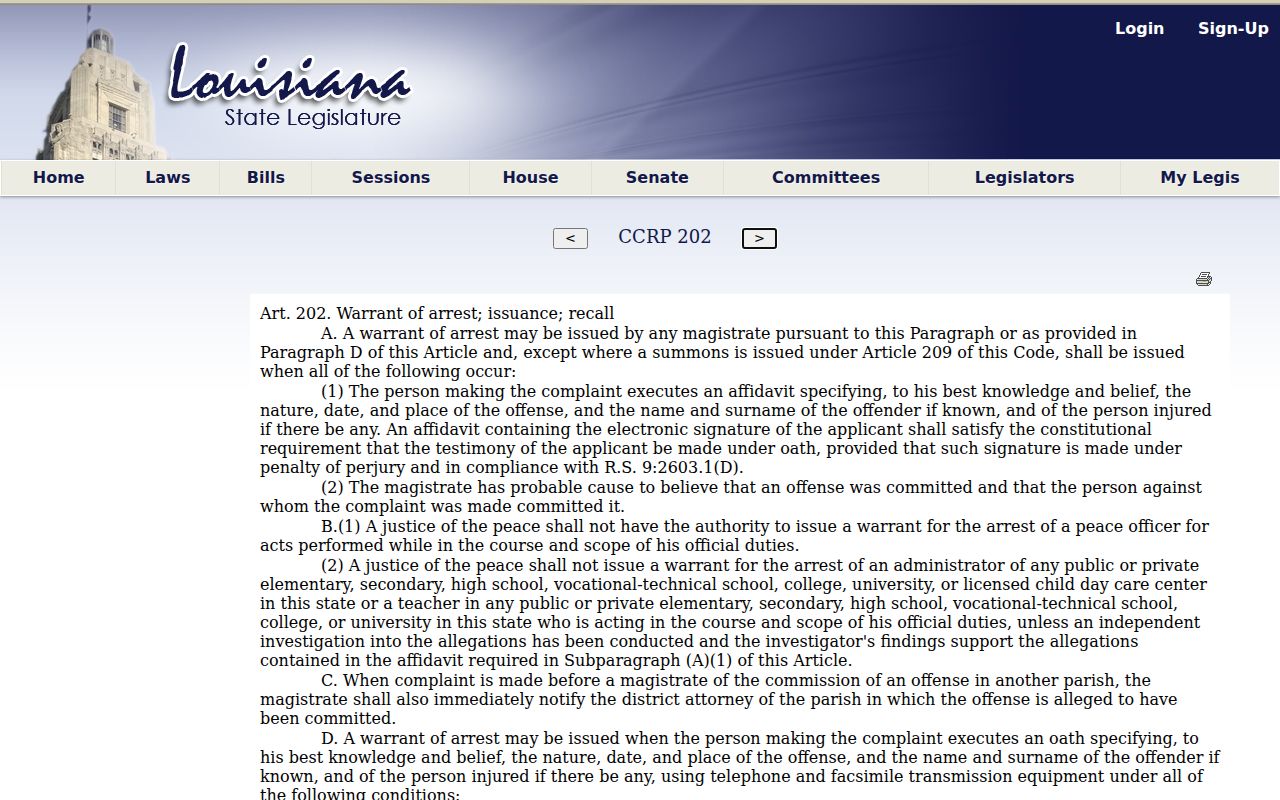
The affidavit explains how a Winn Parish warrant comes to exist, but it does not create a public search portal.
Inside a Winn Parish Arrest Warrant
Article 203 lists what the order must contain. That list is the record, in effect. A bail statement may also appear in noncapital cases where the magistrate is authorized to set one in a Winn Parish case.
| Person or description | The named subject, or a description when the name is not known. |
|---|---|
| Case number | The clerk's docket reference, recorded as case or citation number on court paper. |
| Offense | The charge and its statutory citation. |
| Issue date and place | When and where the order was signed. |
| Command | The direction to arrest and book the person named. |
| Signature and bail | The magistrate who authorized the order, and any bail statement the warrant carries. |
| Service and return | What the serving officer recorded after execution. |
The Required Fields in Article 203
Article 203 is the field list a Winn Parish court works from. It requires a command to arrest and book. The magistrate's signature must appear. The full text from the Legislature shows every required field, including the arrest command and the signature block. That is the shape the docket records.
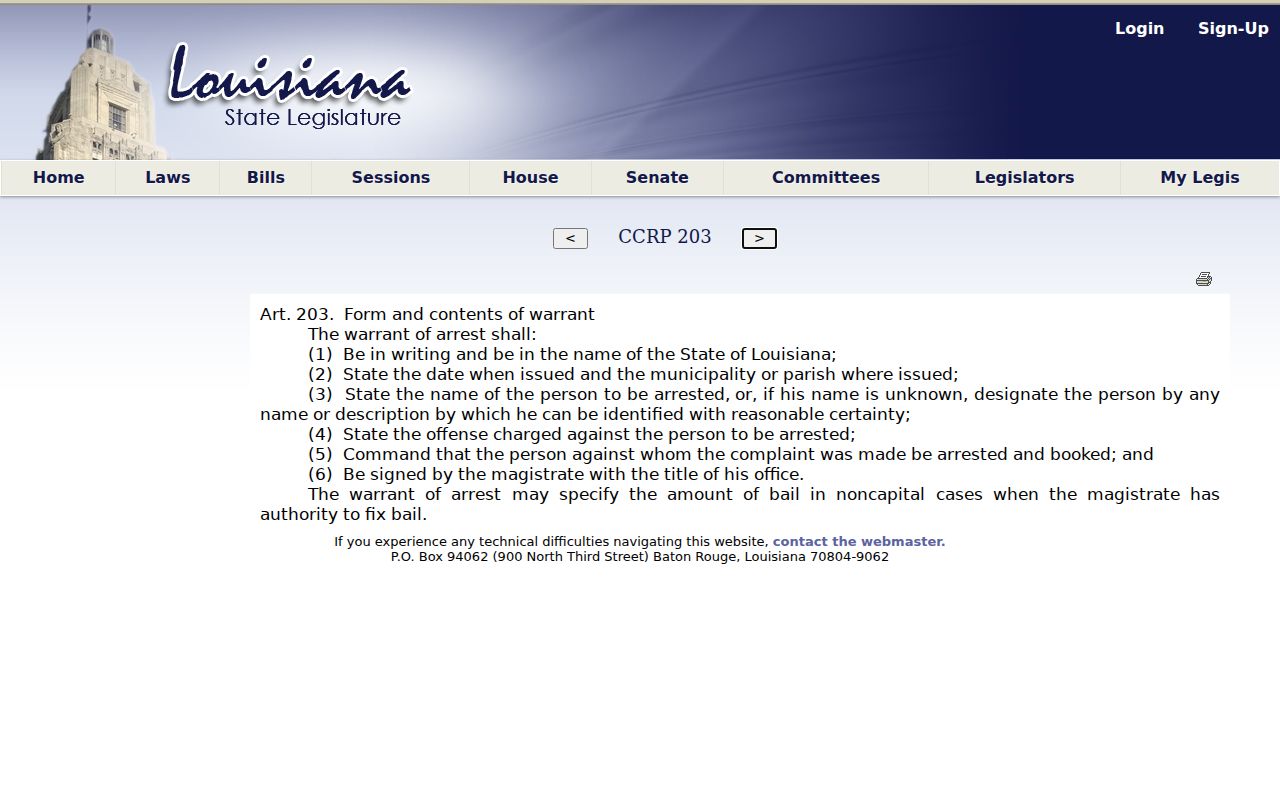
A Winn Parish warrant has a defined shape, and the docket is where that shape gets recorded.
Serving Arrest Warrants in Winn Parish
Executing a warrant is law enforcement work. The officer who serves it may not belong to the agency that asked for it. Article 204 lets any authorized Louisiana peace officer execute an arrest warrant in any parish, and close pursuit rules extend that reach. So service can happen wherever the person turns up. In Winn Parish the channels are the Sheriff's Office, the Winnfield Police Department inside the city, and the Winnfield City Marshal on court papers. Seven ward constables tie into JP process. Any other peace officer with authority can serve. The U.S. Marshals Service and federal partners work in a separate federal layer.
Sheriff, Police, Marshal, and Constable in This Parish
Four local offices touch a Winn Parish warrant. They are not interchangeable, and knowing which one holds your paper saves a wasted call and points your request at the right record.
| Office | Role in the Process | What It Does Not Control |
|---|---|---|
| Winn Parish Sheriff's Office | Principal parish agency; serves process and holds sheriff records | The court's recall decision |
| Winnfield Police Department | City law enforcement for the parish seat | District and JP dockets |
| Winnfield City Marshal | Court papers and bailiff duties for the city court | Acting as a records clerk |
| Ward constables | Connected to justice of the peace process | Operating a warrant database |
Comparing Arrest, Summons, and Bench Warrants
Arrest, summons, bench warrant. Three documents can pull a person into a Louisiana court, and each arrives for a different reason. Article 211.1 lets an officer hand out a summons instead of making an arrest on certain local misdemeanor and traffic warrants in Winn Parish. DWI, weapons, force or violence, child support, and felonies stay outside that option.
| Point | Arrest Warrant | Summons | Bench Warrant |
|---|---|---|---|
| Basis | Probable cause for an offense | Order to appear without immediate arrest | Missed appearance or noncompliance |
| Issued by | A magistrate or judge | The court or an authorized officer | The judge in the pending case |
| First effect | Custody is authorized | A court date is set | The person is brought back to court |
| Notice first | Not required | The document itself is the notice | Statutory notice under art. 333 |
If There Is an Arrest Warrant for You
A Winn Parish arrest warrant is the one warrant type where legal advice should come first. Get advice before you act. The usual paths are voluntary surrender, posting bond if the court set an amount, or a motion to recall or quash, and the charge and notice history decide which fits.
Important: Talk to a Louisiana attorney before deciding anything. Do not confront an officer, do not travel to a jail without confirming the procedure, and do not assume a phone call prevents arrest.
Ask the court what it needs. Ask the jail about custody only. A public records request can obtain the non-exempt parts of a Winn Parish file, but it will not change the docket.
How a Winn Parish Arrest Warrant Record Moves
The record passes through several hands, and each one holds a different piece.
- An applicant presents facts and the required offense information to a magistrate.
- The magistrate reviews the affidavit and decides whether probable cause supports an order.
- If the warrant issues, the clerk or court records it in the case file.
- An authorized peace officer executes the warrant and records the return.
- The person is booked, released, or bonded, and the court records the disposition or recall.
What a Clerk Can Verify and an Officer Can Execute
The clerk reads the docket, confirms whether an order was issued or recalled, and explains how to request the non-exempt record. That is where a Winn Parish warrant check starts. A clerk cannot arrest anyone or withdraw a warrant. Legal advice is off the table too. An officer executes the order, takes a person into custody, and walks through custody steps. An officer cannot touch the court's record. Being told something is "in the system" does not say whether the warrant is active today, so ask the clerk about the record and the officer about custody.
Sealed and Protected Material in a Winn Parish File
Not every page in a Winn Parish court file is open to you. An affidavit can hold investigative material. A proceeding may sit under seal. Juvenile records stay confidential in most cases under Children's Code art. 412, subject to its exceptions. If you send a written request under the Louisiana Public Records Law, ask for the non-exempt record and for the statute behind any redaction. Naming sealed material does not free it for release. Nor does a request grant permission to republish sensitive information.
Minimum Fields for a Winn Parish Records Request
A narrow Winn Parish records request gets an answer fastest. Give the custodian just enough to locate the file, not a person's full history.
- The issuing court and the case number
- The record type wanted: warrant, docket event, return, or disposition
- The date range you are asking about
- The format you want: inspection, paper copy, or electronic copy
- The statutory basis for any withholding or redaction
When a Winn Parish Case Turns Federal
When a Winn Parish case goes federal, the custodian changes too. The U.S. District Court for the Western District of Louisiana covers this parish through its Alexandria division. Federal fugitive matters belong to the U.S. Marshals Service for the district. PACER, the federal electronic records system, is not an all-warrants search. Sealed matters and nonpublic warrant material will not appear just because a name was searched. Federal docket access also carries its own fees and account rules. If an officer calls an issue federal, get the court or agency name and a reference number. Keep that referral handy.